Marco Carrera—Giacomo
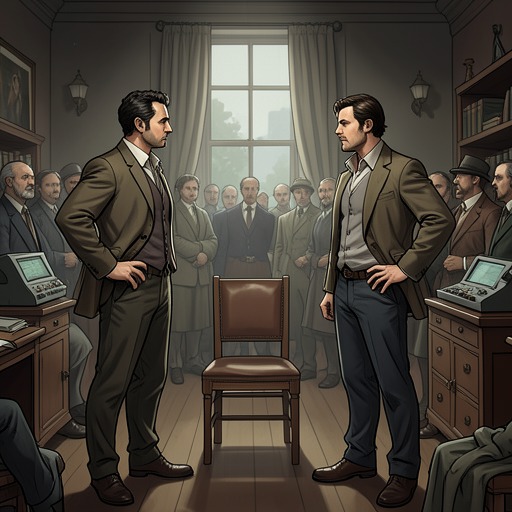
The HummingbirdMarco Carrera—Giacomo is a relationship marked by years of separation, failed communication, and a late reconciliation. As Marco approaches death, their reunion gives the brothers a chance to acknowledge the distance between them without resolving it through explanation: they come together, exchange apologies, and hold one another in silence.
Estrangement and broken correspondence
The brothers’ separation has lasted so long that, by the time Marco is gravely ill, he cannot say exactly how many years have passed since he last heard from Giacomo. The history of their silence has a particular shape: for years Marco wrote to his brother and received no answer; eventually he gave up. Marco remembers that decision clearly, even as the dates and durations around it have blurred.
The pattern differs from Marco’s correspondence with Luisa Lattes. In that relationship, Marco was the one who ended things, and in later years Luisa wrote to him without receiving a reply. With Giacomo, it was Marco who kept writing and Giacomo who did not answer. The contrast makes the brothers’ estrangement more than a simple mutual silence: their separate histories of unanswered letters have left different responsibilities on each side, without the reunion assigning blame.
The reunion at the house
Miraijin arranges for Giacomo and Luisa to join the people gathered around Marco near the end of his life. The invitation startles Marco. He had not imagined improving his life at its very end, and initially feels that nothing is worth wanting. Miraijin reframes the gathering as something she wants for those who will remain after him, not only as a comfort for Marco. He accepts, though he doubts they will actually come; she assures him she will take care of it, and the five guests arrive on short notice.
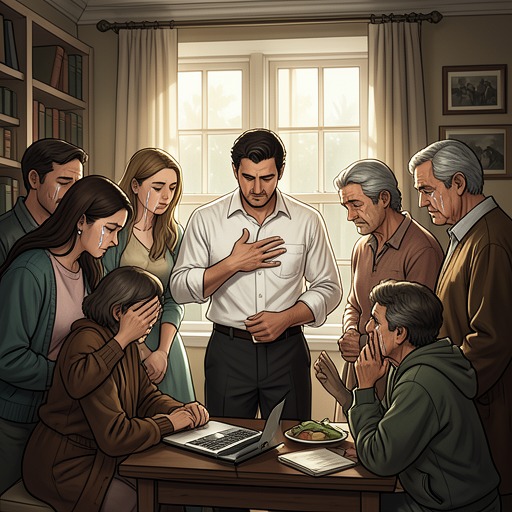
The reunion takes place at the family home, where Marco can see Luisa in the garden speaking with Giacomo. Miraijin passes through the scene and touches the hand of the great-uncle she had never previously met. The meeting is therefore not only a return between two brothers: it brings a previously absent member of Marco’s family into Miraijin’s present, while Marco watches from inside the house.
Marco’s illness shapes what he can remember and how he experiences the gathering. Metastases have reached his brain, and his memory comes and goes; he cannot recall the film that inspired Miraijin’s idea. He also cannot remember whether Luisa once slept in his father Probus’s room, although that room has remained unused since Probus died. The home holds possible traces of earlier visits, but Marco cannot make those traces certain. In the present, the visible fact is simpler: Giacomo is there, after years of silence.
Apologies and physical reconciliation
Before the visitors approach him, Marco has considered how to behave in his final moments. He rejects music, a farewell speech, solemnity, and self-pity. He wants, instead, to offer a hug to anyone who wants one and to make clear that the others are neither accomplices nor responsible for what is happening. This plan turns the gathering away from ceremony and toward direct, ordinary contact.
When Giacomo comes forward, the brothers hesitate briefly over who should approach first. Giacomo does. They embrace, and both feel their stomachs tighten. The bodily strain carries what neither has said: earlier, two sudden sobs from Giacomo had threatened to break the composure he had maintained since arriving, and Marco had seen his brother’s face collapse into a desperate grimace before he regained control. Now the embrace brings the brothers close enough to share that tension rather than explain it.
Giacomo says he is sorry. Marco replies that Giacomo is the one who should be sorry. They separate, sniff, and say nothing more. The exchange does not specify what either brother is apologizing for, nor does it turn their years apart into a neatly narrated dispute. Its reciprocity matters precisely because the cause remains unspoken: each takes up the language of apology, and neither demands a fuller account before they embrace.
Meaning and limits of reconciliation
The brothers’ reunion offers reconciliation without a retrospective settlement. The unanswered letters remain unanswered, and the narrative does not provide a detailed explanation for their estrangement. Instead, the final encounter gives the relationship a concrete change: Giacomo is no longer only the brother from whom Marco has been separated, but the person standing before him, approaching first and accepting an embrace.
That change occurs within a gathering Miraijin has made possible for the survivors, at a time when Marco’s illness has weakened his memory and the future he might have shared with his brother has narrowed to this meeting. The brief apologies cannot restore the years lost, but they interrupt the silence that defined them. In the closing scene, reconciliation is not a declaration that everything is repaired; it is the modest, consequential act of coming forward, holding on, and answering sorrow with sorrow.